
Asghar Farhadi’s ‘The Past’ is a complex and absorbing look at the various nuances, both light and heavy, of love, both past and present. It is a detailed study of the lives of three characters and their children, and how what appears to be something in their lives, often isn’t. The mood is rather depressing and desolate from the offset of the film, and this feeling of icy coldness pervades throughout, and hence is an emotionally taxing film; this however does not and should not hide its complex brilliance.
Ahmad is seeing his (ex)wife, Marie-Ann after four years to finalise their divorce. He is forced to live in her house as she hadn’t booked a hotel for him, and he sees that many things have changed since he left. Marie is now living with a new partner Samir, whom she intends to marry, along with his son Fouad, and her two daughters Lucie and Lei, the former being totally against her mother’s marriage to Samir. Ahmad’s presence in this varied (step)household only serves to cause awkwardness and it is unclear why Marie wants him to live there for the timebeing. To make matters more complicated, Samir has a comatose wife who is bedridden due to her suicidal nature.
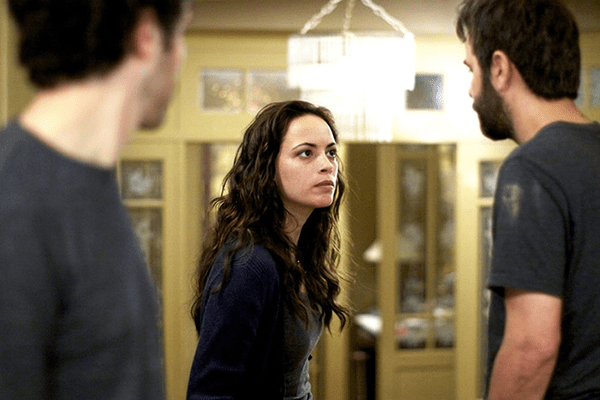
Source
This tense and cloyed atmosphere serves as the recipe for many arguments, fights, and some interestingly shocking secrets to get whirled up and rise to the surface, and as the story proceeds, our viewpoints and opinions change and alter as we get into each character’s head. This is what makes ‘The Past’ so deliciously engrossing; each character is given ample time to tug at our heartstrings, and we can see and sympathise from each character’s viewpoint, from the gentle and understanding Ahmad, the fiery and strained Marie, the confused and silently frustrated Samir, to the misled and guilty Lucie…each character has been built in such a clear manner that the melange of viewpoints that we are barraged with becomes a fascinating study in human emotions, also exposing the frailties of love which we often try to blindside in our fear and constant need for companionship (and our deep desire to erase the pain of the past).
Berenice Bejo sparkles in Marie Ann’s character. She perfectly portrays the stressed and expectant mother who simply wants to find closure and let go of the past while juggling household duties and trying to clear the air with Lucie. The scene where she screams at Lucie is a little jarring to watch because it feels so unimaginably realistic. Bejo’s restraint and fieriness are wonderful to watch. Ali Mofassa does an admirable job too as Ahmad, the divorcee who has the unenviable job of trying to clear up the mess his former household is in, while uncovering different and dark secrets which take the story in different directions. Taher Rehmann is well cast as the silent Samir who is confused between his feelings for Marie, and the love he so clearly still has for his comatose wife. The children play their roles admirably, especially Lucie who delicately displays her character’s sadness, guilt and confusion with panache.
The direction is patient and artistic, allowing the story to pace according to its own terms. I especially liked the windscreen wiper motif that was used in the beginning of the film’s opening credits; sophisticated and different. All in all, a beautiful movie for one to get lost in the intricacies of human lives and the complexities and indelible nature of love.
[FEATURED IMAGE SOURCE]
 shaunwanikar.com